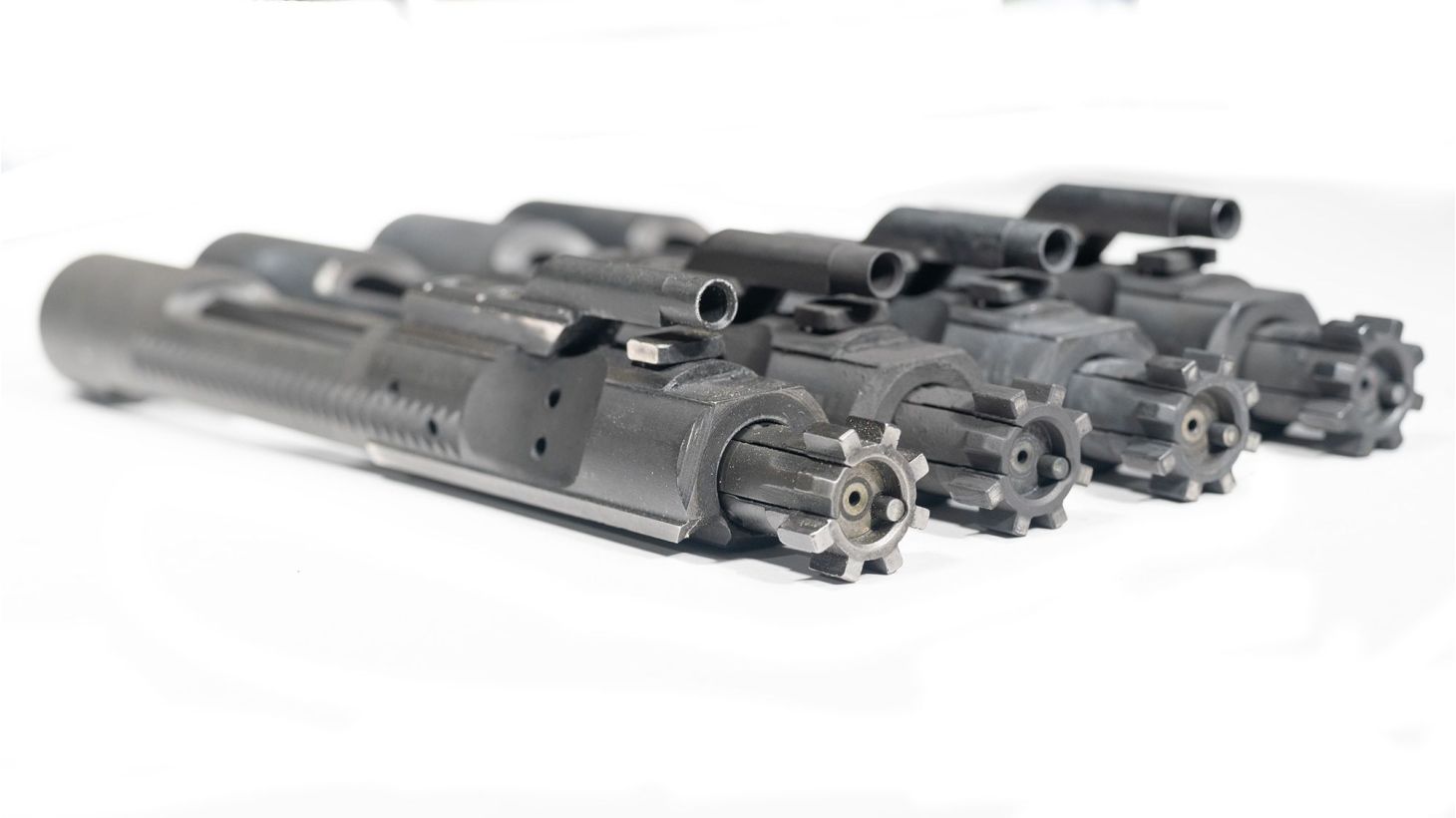
If you’ve ever cracked open an AR-15, you know gunandpartspros.com is the beating heart of this modular masterpiece. It’s the workhorse that makes your rifle cycle, and picking the right one can mean the difference between a smooth-shooting range toy and a finicky jam-o-matic. Today, we’re diving deep into the world of BCGs—how they work, the finishes you can get, which ones reign supreme, and how to pick the best one for your build. Buckle up, because we’re about to get nerdy with it. What Does a Bolt Carrier Group Do? The BCG is the unsung hero of your AR-15, handling the critical tasks that keep your rifle running like a well-oiled machine. At its core, the BCG is responsible for chambering rounds, firing them, extracting spent casings, and resetting the action for the next shot. It’s a complex little beast, made up of several key components: the bolt, carrier, gas key, cam pin, firing pin, and retaining pin, all working in harmony. Here’s how it goes down: when you pull the trigger, the firing pin strikes the primer, igniting the powder and sending the bullet downrange. The gas from that explosion travels through the gas tube, hits the gas key on the BCG, and pushes the carrier rearward. As it moves, the bolt unlocks, extracts the empty casing, and ejects it. The buffer spring then shoves the BCG forward, picking up a fresh round from the magazine and chambering it. Rinse and repeat. This cycle happens in a fraction of a second, and a good BCG makes it feel seamless. A quality BCG is built to tight tolerances, ensuring reliable cycling under harsh conditions—whether you’re dumping mags at the range or running drills in the mud. Cheap BCGs, on the other hand, can lead to failures to feed, extract, or eject, turning your AR into a glorified paperweight. The materials, machining, and finish all play a role in how well it performs, which brings us to our next point What Finishes Are Available for Bolt Carrier Groups and What Are Their Purposes? The finish on a BCG isn’t just about looking pretty (though a slick-looking BCG does have range cred). It’s about durability, corrosion resistance, and ease of maintenance. Here’s a rundown of the most common finishes and why they matter: Phosphate (Parkerized) The OG of BCG finishes, phosphate is the mil-spec standard. It’s a manganese or zinc phosphate coating that gives the BCG that classic matte gray look. Phosphate is tough, affordable, and holds oil well, which helps reduce friction and makes cleaning easier. It’s not the most corrosion-resistant option, but it’s battle-proven and reliable. If you’re building a no-frills, hard-use rifle, a phosphate BCG is tough to beat. Downside? It’s not as slick as modern coatings, so carbon buildup can be a pain to scrub off after a long day at the range. Nitride (Melonite/QPQ) Nitride, often called Melonite or Quench-Polish-Quench (QPQ), is a heat-treatment process that hardens the steel’s surface and adds a slick, black finish. It’s incredibly durable, corrosion-resistant, and smoother than phosphate, meaning less friction and easier cleanup. Nitride BCGs are a favorite for high-round-count shooters because they hold up under heat and abuse. They’re also budget-friendly compared to some high-end coatings. The only knock? They don’t have the exotic appeal of fancier finishes, but they get the job done. Nickel Boron Nickel boron (NiB) is the shiny, silver-coated rockstar of BCG finishes. It’s slicker than a used car salesman, reducing friction to a minimum and making carbon buildup wipe off like a dream. NiB is also highly corrosion-resistant, which is great for humid environments or if you’re running suppressed (where things get extra dirty). The downside? It’s pricier than phosphate or nitride, and the shiny finish can wear off over time, especially on high-contact areas like the carrier rails. Still, for a low-maintenance BCG that looks badass, NiB is a solid pick. Diamond-Like Carbon (DLC) DLC is the premium choice for BCGs, offering a super-hard, low-friction coating that’s tougher than a two-dollar steak. It’s jet-black, corrosion-resistant, and so slick it makes other finishes look like sandpaper. DLC BCGs are built for extreme durability and minimal maintenance, ideal for suppressed rifles or high-volume shooting. The catch? They’re expensive—sometimes double the cost of a nitride BCG. If you’re a baller on a budget, you might wince at the price, but for top-tier performance, DLC is hard to beat. ChromeChrome-plated BCGs are less common today but were popular in early ARs. Chrome is insanely durable and corrosion-resistant, with a mirror-like finish that reduces friction. It’s still used in some high-end applications, especially for machine guns or rifles in brutal environments. However, chrome can be tricky to apply evenly, and quality control issues can lead to flaking. It’s also pricey and has largely been replaced by nitride and DLC for most shooters. Each finish has its trade-offs, but your choice depends on your budget, environment, and how much you hate cleaning carbon off your BCG. Now, let’s talk about which BCG types stand out as the best. What Is the Best Type of Bolt Carrier Group? There’s no one-size-fits-all “best” BCG; it depends on your rifle’s purpose, budget, and preferences. That said, we can break down the main types of BCGs and highlight what makes them shine. Mil-Spec BCGsMil-spec BCGs, typically phosphate-coated, are built to military standards (think M16 or M4). They’re made from 8620 steel for the carrier and Carpenter 158 steel for the bolt, with proper staking on the gas key and rigorous testing (like high-pressure testing or magnetic particle inspection). These are reliable, affordable, and perfect for a general-purpose AR. Brands like Colt, BCM, and PSA’s Premium line deliver mil-spec BCGs that won’t disappoint you. Best for: budget builds, duty rifles, or anyone who wants proven reliability. Lightweight BCGs Lightweight BCGs, often made from aluminum or titanium with low-mass carriers, are designed to reduce recoil and speed up cycling. They’re popular in competition rifles where every ounce matters, like 3-gun or USPSA. Brands
