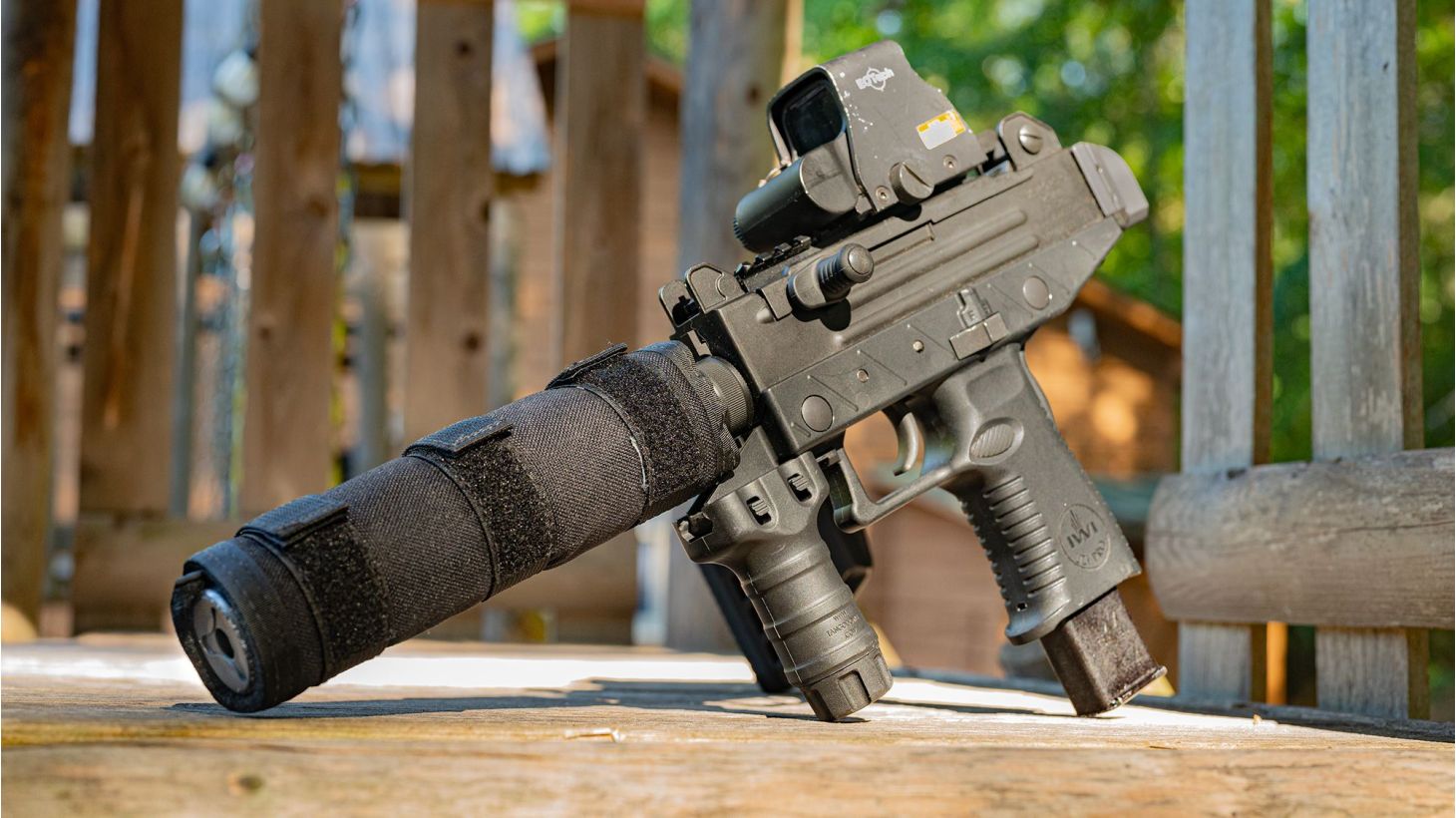
A sound suppressor is one of the coolest and most enjoyable firearms accessories. But what most people don’t know is that suppressors have an enormous aftermarket of parts to maximize your suppressed shooting experience. So, to ensure you get the most out of your federally regulated muffler, let’s delve into the top five suppressor accessories. Subsonic Ammo Full disclosure, not every caliber has subsonic loadings available for it. But the good news is that with the ever-increasing popularity of suppressors, the number of calibers getting subsonic loads increases daily. Of course, shooters could simply buy a naturally subsonic round – or a cartridge whose standard loading launches the bullet slower than the speed of sound. But for the sake of simplicity, we will assume your gun fires supersonic projectiles. Why buy subsonic ammo? In a word: performance. When it comes to the report or sound produced by firing a gun, there are two significant components: muzzle blast and supersonic crack. A suppressor reduces the muzzle blast by allowing the hot expanding gases to cool inside the suppressor before escaping the muzzle, but doesn’t affect the supersonic crack. That is, unless you have an MP5SD where the barrel itself is ported inside the integral suppressor and thus decelerates the round. To eliminate the “crack” produced by the round breaking the sound barrier (which is the sound of the air collapsing on itself), the bullet has to stay under the speed of sound (1,125fps). The only way to do this other than the aforementioned integrally suppressed gun is to use slower bullets. Interestingly, it isn’t a simple case of reducing the powder load and calling it a day. While this might work, a better solution that doesn’t affect the round’s efficacy as much is to use a heavier projectile propelled by a modified charge to meet SAAMI specs. The only downside to subsonic rounds is that they have a more limited effective range and a different ballistic arc. So if your rifle’s optic is zeroed for factory supersonic ammo, you’ll have to adjust that zero for subsonic rounds. How much of a difference does it make? Depending on the cartridge, most are exponentially quieter with subsonic loads than supersonic ones. For example, depending on barrel length and suppressor size, subsonic loads are 6-10 decibels quieter than supersonic ones. Remember, decibels are logarithmic scale units, so if supersonic shots are ten decibels louder, they are ten times louder! Lesson learned: Use subsonic loads whenever possible. Quick Detach Muzzle Device Originally, sound suppressors were clamp-on devices like the Soviet Bramit Device, which locked onto the Mosin-Nagant 91/30’s front sight. Later, manufacturers replaced these with male-threaded muzzles and female-threaded endcaps on suppressors. These are great and are still used by many budget-friendly sound suppressors. A shooter needs only to screw the suppressor on to a threaded muzzle (assuming they have the same thread pitch) tighten with a tool, and the gun is ready to use. The problem with these direct thread suppressors is that they aren’t swift to install/remove and are limited (without the use of an adaptor) to one thread pitch. The solution to these issues is the Quick Detach or QD suppressor mount. A QD suppressor mount replaces a firearm’s standard muzzle device with one that can rapidly interface with a given suppressor type. Some companies use a cam-lock system, while others use oversized threads that only require around two complete rotations to lock into place. This means that a shooter who has multiple different firearms they want to suppressor can purchase additional QD muzzle devices instead of new suppressors. Another advantage of these devices is that they allow shooters to quickly remove their suppressor and reduce the gun’s overall length when storing or transporting it. One exciting trend emerging with these devices is their partial standardization. Many companies are starting to use the same QD mounts as other companies, allowing shooters to buy a new suppressor without replacing several QD devices. The only downside to QD mounts is their cost. Several premium brand suppressors use muzzle devices that cost over $100 each. While still vastly less expensive than a new suppressor, buying five of these can a shooter back 700 or more dollars. Heat-Resistant Gloves Suppressors get really hot, really fast. They are metal devices that contain an explosion consisting of fiery gas. If you failed to properly tighten a suppressor before using it and notice it “walking off” your muzzle, set the gun down and wait for it to cool. If that’s not an option, you’ll need some sort of heat-resistant glove to prevent severe burns to your hands. Before you ask, yes, a Kevlar oven mitt will suffice if you don’t have anything else. But given the amount of aerated lead found on muzzle devices, you should probably leave it in the kitchen, especially if you have young kids. Instead, shooters should invest in a special heat-resistant glove or mitt to handle their hot suppressors safely. If you think I’m being dramatic, remember that it only takes a single magazine to get a rifle suppressor hot enough to cook bacon. We all love the smell and sound of sizzling bacon, but not if the bacon is your hand. There aren’t really any downsides. Most heat-resistant gloves are under $100 and take up very little space in a shooting bag. Don’t cheap out; buy a purpose-built glove or at least a Kevlar oven mitt to protect your hands. Also, remember that although these gloves protect you from the heat, they don’t do so forever. Do what you need to do to your suppressor, then stop touching it and remove the gloves. Ultrasonic Cleaner If you thought guns got dirty fast, wait until you clean a suppressor. Firearms only contain the hot expanding gases produced by detonating a round for a few milliseconds, while suppressors are designed to capture those hot gases and allow them to dwell for awhile. As a result, suppressors collect carbon and fouling exponentially faster than firearms. With a
